

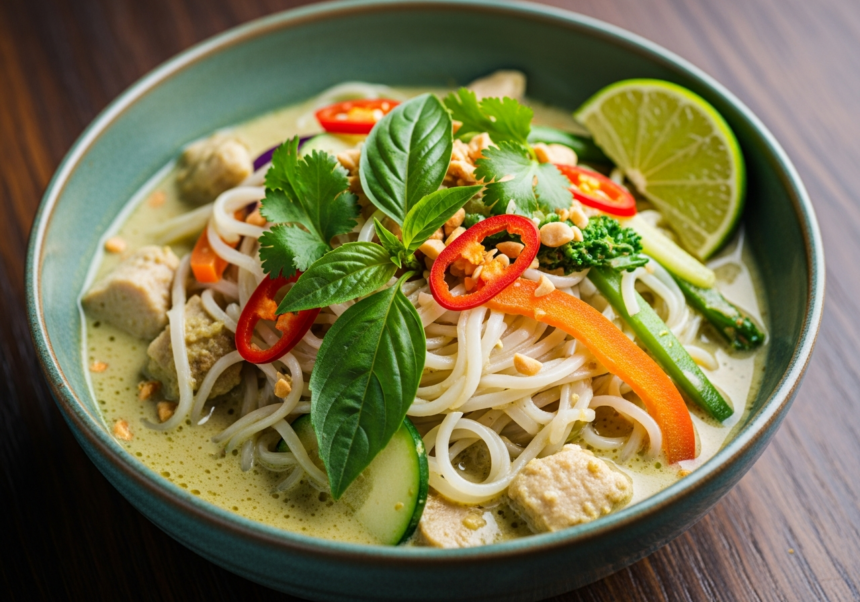
In the vibrant world of global cuisine, few dishes capture the heart and palate quite like thai green curry noodle bowls. Bursting with a harmonious blend of fragrant herbs, spicy chilies, and creamy coconut milk, this dish is a festivity of bold flavors and comforting textures. whether you’re a seasoned home cook or a curious foodie, crafting the perfect Thai green curry noodle bowl invites you on an exciting culinary journey-one that balances tradition and creativity in every spoonful. Join us as we explore the secrets to savoring this iconic taste of Thailand, from selecting fresh ingredients to mastering the delicate dance of spices that make each bite unforgettable.
Savor the Flavors: Crafting the Perfect Thai green Curry Noodle Bowl
Savor the flavors of Thailand with this vibrant and aromatic Thai green curry noodle bowl that brings together the perfect balance of spice, creaminess, and freshness. Rooted deeply in Thailand’s coastal and jungle regions, this dish captures the essence of conventional green curry aromatics while celebrating the lively texture of carefully chosen noodles and fresh ingredients.Whether it’s your first time cooking Thai cuisine or a beloved classic on your table, this recipe allows you to craft an authentic experience that awakens your senses.
Prep and Cook Time
- Readiness: 20 minutes
- cooking: 25 minutes
- Total Time: 45 minutes
Yield
- Serves 4 generous bowls
Difficulty Level
- Medium - ideal for home cooks eager to elevate their curry skills
Ingredients
- 2 tablespoons green curry paste (preferably homemade or quality store-bought)
- 1 can (14 oz) full-fat coconut milk
- 1 cup vegetable broth
- 200 grams rice noodles (flat or vermicelli style)
- 1 medium eggplant,cut into bite-sized cubes
- 1 cup snap peas,trimmed
- 1 red bell pepper,thinly sliced
- 1 cup fresh Thai basil leaves,torn
- 1 tablespoon palm sugar or light brown sugar
- 2 tablespoons vegetable oil
- 2 teaspoons fish sauce (or soy sauce for vegetarian version)
- Juice of 1 lime
- 1 small red chili,thinly sliced (optional,for extra heat)
- 1/4 cup chopped fresh cilantro
- Crushed roasted peanuts,for garnish
- Lime wedges,for serving
Instructions
- Prepare the noodles: Soak the rice noodles in lukewarm water for 15-20 minutes until tender but still slightly firm. Drain and set aside. For best results, choose noodles that hold texture well when steeped in curry broth.
- Sauté the aromatics: Heat vegetable oil over medium heat in a wide saucepan. Add green curry paste and sauté until fragrant and slightly oily, about 2-3 minutes. This process intensifies the curry’s foundational flavors.
- Build the broth: Slowly stir in the coconut milk and vegetable broth, bringing the mixture to a gentle simmer. Add palm sugar and fish sauce, stirring to achieve a harmonious balance between sweetness and saltiness.
- Cook the vegetables: Add eggplant first, cooking for about 5 minutes until tender. Then add snap peas and red bell pepper, simmering for another 3-4 minutes to maintain their crisp texture.
- Combine noodles and curry: Gently fold the softened noodles into the curry broth, warming them through and allowing the noodles to soak up the aromatic flavors without losing bite.Avoid overcooking the noodles to prevent mushiness.
- Finishing touches: Remove from heat and stir in lime juice and torn Thai basil leaves for a fragrant, fresh lift. Adjust seasoning with extra fish sauce or sugar if needed.
- Serve promptly: Ladle noodles and curry broth into bowls. Garnish liberally with fresh cilantro,sliced red chili if heat is desired,and a sprinkle of crushed roasted peanuts. Accompany each bowl with lime wedges for an added zesty kick.
Tips for Success
- Choosing noodles: For authentic texture, rice noodles work best, but if unavailable, glass noodles or thin egg noodles can substitute. Always soak rather of boil to prevent over-softening.
- Adjusting heat: Control the curry’s spiciness by reducing or increasing green curry paste. For milder palates, add extra coconut milk for creaminess without losing flavor depth.
- Make ahead: Prepare the curry broth and vegetable base ahead of time and refrigerate separately. Assemble and warm noodles just before serving to retain noodle integrity.
- ingredient swaps: Swap snap peas with green beans or baby corn; use tofu or chicken breast for extra protein while keeping flavors balanced.
Serving Suggestions
Present your Thai green curry noodle bowl in wide, shallow bowls to showcase its colorful vegetables and golden-green broth. A scattering of fresh herbs and peanuts not only enhances texture but bursts of vibrant flavors. Serve alongside a crisp cucumber salad or sticky rice for a complete Thai feast. Light Thai iced tea or coconut water pairs beautifully to cool the palate between bites.

| Nutrient | Per Serving |
|---|---|
| Calories | 410 kcal |
| Protein | 9 g |
| Carbohydrates | 48 g |
| Fat | 18 g |
For a deeper dive into Thai spices and methods, explore our Authentic Thai Spice Guide. Also, to understand the science behind balancing flavors, check out Serious Eats’ flavor science article.
Q&A
Q&A: Savor the Flavors - Crafting the Perfect Thai Green Curry Noodle Bowl
Q1: What makes Thai green curry so distinctive among other curry varieties?
A1: Thai green curry is celebrated for its vibrant balance of fresh green chilies, fragrant herbs like Thai basil and cilantro, and creamy coconut milk. Unlike other curries that lean heavily on dry spices, green curry’s freshness and subtle sweetness come from ingredients like kaffir lime leaves, lemongrass, and galangal, creating a shining, aromatic, and slightly spicy flavor profile.
Q2: Which noodles work best in a Thai green curry noodle bowl?
A2: The ideal noodles complement the curry without overpowering it. thai rice noodles, either flat or vermicelli-style, are a perfect choice because they absorb the curry sauce beautifully while maintaining a light texture. For a more robust bite, egg noodles or even udon can be used, but rice noodles provide that authentic Thai experience.
Q3: How do you achieve the perfect balance between creaminess and spice in the curry?
A3: Achieving balance lies in layering flavors carefully. Start by sautéing your green curry paste gently to release its aromas, then add coconut milk gradually-reserve a little thick creamier milk for swirls at the end to give richness. Adjust heat by using fresh green chilies for an uplifting spice rather than overwhelming heat. Fresh lime juice or kaffir lime zest can brighten the curry and soften lingering heat, creating harmony between spicy and creamy.
Q4: What protein options pair best with this curry, keeping it authentic and tasty?
A4: Chicken is a classic and versatile option, soaking up the green curry’s flavors perfectly. For a vegetarian or vegan twist, tofu or tempeh work wonderfully, absorbing the aromatic sauce while providing a satisfying texture. Seafood like shrimp can add a subtle sweetness and pairs well with the curry’s herbal notes, too.
Q5: Which fresh herbs and toppings elevate a Thai green curry noodle bowl?
A5: Fresh herbs are crucial to bringing the dish alive. Thai basil adds sweet, anise-like notes, while cilantro contributes a refreshing brightness. Thinly sliced green onions and finely chopped red chilies can provide a textural contrast and a gentle kick. For crunch, toasted peanuts or fried shallots make an excellent garnish, introducing layers of flavor and texture.
Q6: Can this dish be prepared ahead, and if so, how do you maintain its freshness?
A6: While the curry can be made ahead, it’s best to keep noodles separate until serving to prevent them from becoming soggy. Store the curry in an airtight container, and reheat gently with a splash of coconut milk or broth to restore its creamy consistency. Assemble the bowl just before eating, adding fresh herbs and toppings last for vibrant flavor and texture.
Q7: How can home cooks fine-tune the green curry paste if it’s store-bought?
A7: Store-bought green curry paste is a grate shortcut, but you can elevate it by stirring in freshly grated lemongrass, chopped Thai bird’s eye chilies for extra heat, or a squeeze of fresh lime juice to brighten the mix. Toasting a small handful of coriander seeds and finely grinding them before adding to the paste also enhances the depth of flavor.
Q8: What makes this noodle bowl a comforting yet exotic meal?
A8: The marriage of creamy coconut milk, lively herbs, and tender noodles creates a multi-dimensional dish that feels both cozy and adventurous. Every spoonful offers warmth, spice, and fresh vibrancy-a sensory journey that satisfies cravings for comfort food while delivering an exotic escape on a plate.
To Conclude
As the fragrant aromas of lemongrass, kaffir lime, and fresh basil linger in the air, your Thai green curry noodle bowl stands as a vibrant testament to the harmony of bold flavors and textures. Crafting this dish is more than just following a recipe-it’s an invitation to explore the rich tapestry of Thailand’s culinary heritage, right in your own kitchen. Whether you’re savoring the silky coconut broth or the tender noodles weaving through colorful vegetables and tender protein, each bite tells a story of tradition and creativity.so,roll up your sleeves,gather your ingredients,and let your taste buds embark on a flavorful journey that celebrates the art of balance and the joy of homemade Thai cuisine. Your perfect bowl awaits-ready to nourish, delight, and inspire your next kitchen adventure.